Category

Drone

The Benefits of Investing in Video 

By Blog, Blog Post, Case Study, Drone, How to, Motion Graphics, Promotional, Technology, Uncategorized

The benefits of investing in video is firmly established. Video is a necessary business tool and the manner that businesses use video is also becoming increasingly diverse and creative.  This has come about through the advances in digital and the accessibility of graphics tools and skills.  The key types of video we experience as being the most popular   are Promotional and Case Study, however there’s a wealth in between.


Social Media Content

A large part of the expense of making video is spent on location filming. So depending upon the video marketing strategy, a clever and sensible idea is to examine the content and seek to gain more through the edit process.  This can then be placed on the multitude of social media platforms to drive traffic through engagement. 

Editing Costs – Day Rates apply

Promotional 

We identify these videos as being positioned at the ‘top of the sales funnel’.  Marketing activity that feeds into the funnel at this point is about creating awareness of your company, brand, individual brands, new products and services.  This is your ‘show stopper’ video that communicated your USP’s and how your business is differentiating from its competitors.  There are many considerations here especially when it comes to the style and tactile elements. 

Typical costs can range from £3000 — £10,000 (dependent upon expectation)
Case Study

We see this featuring at the ‘bottom of the sales funnel’.  This acts as the final decision maker, generating those valuable conversions. Case studies act as rich format testimonials and can be incredibly useful when it comes to the final conversion and winning significant contracts. 

Case Studies involve location filming together with interviews and B-Roll footage, adding context.

Typical costs range from £2500 — £6000 (dependent upon expectation)

These fall into the following basic marketing models: AIDA (Attention, Interest, Desire, Action).  Content created can then be used in DRIP marketing and can be seeded through content rich methods such as blogs.  Additionally they can be used in all other forms of communication that act as a reminder.
How To 

These can be incredibly important, factual and can involve not just video but motion graphics and additional graphics related to the product or service. 

Costs depend upon what’s involved.  A simple demonstration can be £800-£1000.  More complex videos will be relative to how many days are spent.  It maybe that a series needs creating. 

Typical costs range from £800 — £2000
Welbilt Merrychef

Pre-records 

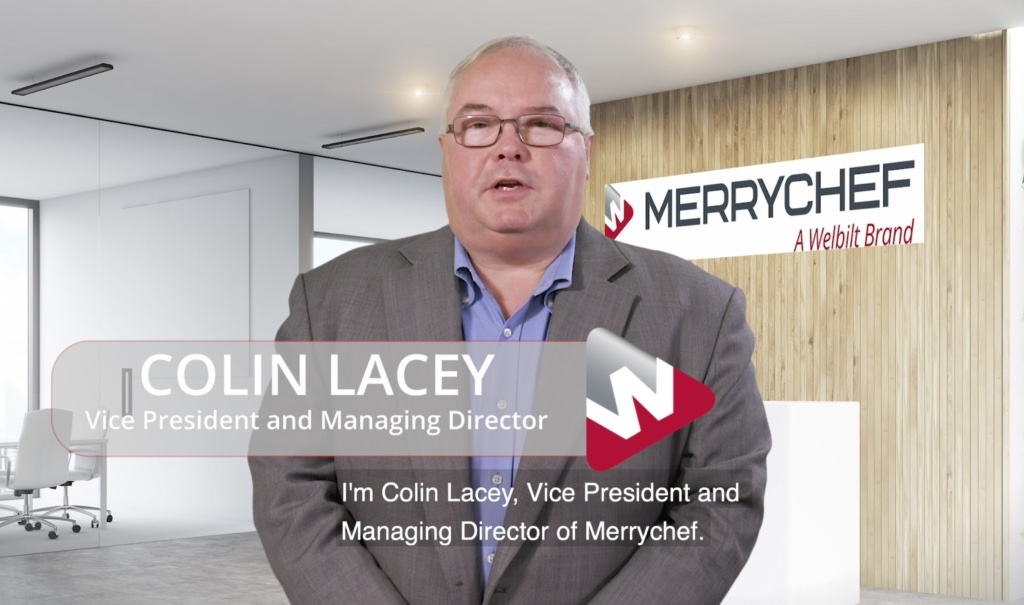
These have been a critical tool during the various lockdowns and the inability for teams to meet and to visit clients.  They have been a lifeline for business whether it is has been generated through Microsoft Teams and or Zoom.  Clients can provide bumpers or we create them.  They are being used in a variety of ways such as blog posts of case studies.  We believe that they’re here to stay as its’s been a way of connecting and sharing information potentially more quickly. 

Editing Costs £300-£600

Events & Conferences 

Traditionally video captured at events and conferences are used in a multitude of ways.  It’s a great way to showcase products and achieves brand awareness and presence. Capturing video footage of stands, keynote speakers, panels, and interviews can be used afterwards in marketing content for website and blogs.

Typical costs range from £1500 — £3000

Phanatom Pro

Drone – Overview for obtaining your commercial Licence

By Blog, Drone

Setting yourself up for working with drones can be a daunting process, especially when you start out.

With recent issues around airports relating to drones, it has caused a re-think in how the CAA works and interacts with drone pilots.  Now larger restrictions are in place around airports and other airspace users, as well as the public being more aware and subsequently disliking drones, due to the bad press.  Also, everyone now needs to take an online test and register their drone.  If you are looking to use a drone commercially, this might not be such a bad thing, as it should reduce the amount of people using drones without due care and attention.

Want to fly your drone commercially?

If you want to take the next step and use your drone commercially, you will need to acquire a full drone licence, a PFCO (Permission for Commercial Operation). This will need to be attained by completing a theory and practical assessment, then submitting your operational manual to the Civil Aviation Authority (CAA), plus paying your annual fee and insurance documents.

The theory and practical course can be completed through a number of organisations and companies. I chose to use Coptrz’s for the following reasons; firstly, they were running the courses from a local location to me.  Secondly, they had a thorough and very comprehensive course. Finally, everything was clear to understand and provided a good insight into using your drone for commercial purposes.

The Course

The course lasted four days. The first two days were theory based (slightly reminded me of being back in the classroom at school, but much more fun!), being led by an instructor and learning all the ins and outs of drone operations theory. There was a lot of information to take in, but it was really useful to understand what is required of a commercial drone pilot.  The instructor gave an in depth knowledge and insight into what was needed to complete commercial work. Whether it’s looking at the airspace around your working location, people and possible surrounding hazards.  In addition the dos and don’ts of creating all the appropriate documentation for the flight plan including Risk Assessments.

Day three, the theory test.  If this part was failed you couldn’t complete the practical test on the following day, you can retake the test at a later date.  Thankfully I passed first time!  Very similar to a car theory test, which, when, at the time of my completion was multiple choice. ABCD options to a number of questions, every 6-8 questions covering a different topic of drone theory. I think it was 64 questions with an hour and a half time limit. The topics varied from drone practice, health and safety, reading navigational maps, aeronautical maps and the principles about your equipment, among other things. Upon passing I moved onto the next step, which was the flight assessment.

The Flight Test

After passing the theory test we were taken through the finer details of a flight plan and everything that needed to be completed in a practical and written sense prior to a flight, as we had learned through the theory.  We were also talked through manoeuvres that would need to be completed, as in a driving test, while discussing safe distances etc.  This allowed us to understand the full detail of everything we had learned, putting it into practice, as if it was for our first commercial client.  This enabled us to understand and implement everything we had learned, which was of a great benefit. Finally, the fourth day, the practical assessment. We each had 20 to 30 minutes slots in which to complete the manoeuvres, again like a driving test.  Plus anything extra the invigilator requested during the examination. There wasn’t a time restriction on how long the assessment took, as long as it was being done safely and the manoeuvres were completed correctly. An example of an invigilator’s extra request could be, “Someone has walked into your airspace that is not under your control.” What should you do?  The answer is to move the drone out the persons range (50M away while in flight), another example could be “Calibrate the compass of your drone”.  One important note here is that if you have a drone that has an “ATTI” mode function, you will have to demonstrate that you can operate your drone in this mode safely and following certain additional manoeuvres.

Like on a driving test there are minors and majors. If you get a major, you fail the test. On completion of the test you are invited back to the office, where you will have a debriefing, discussing how the test went, any points to maybe work on and whether you passed or failed.  I am very pleased to say that I passed my flight test and have now been flying commercially for a year.

The fantastic parts I found for using Coptrz were detailed worksheets, this helped with ingesting all the written information you need to learn, for the theory test, as well as the written documents you need to produce for a commercial flight.  The most important part was the contacts you acquire with the team and especially the instructor, even after completing the course. This has enabled me to, more than once, contact them with small queries when starting out commercially, which has been excellent.  This is important because it gives you that extra security, and really helps you start on your journey of becoming a drone pilot and doing commercial work. The customer service is second to none and gives you support which helps make you feel safe in the knowledge that you fully understand and have everything you need to create fantastic and exciting imagery for your clients.

Is a great site for beginners to gain knowledge before starting their course

By John Sheppard


GET IN TOUCH
AND GET TO KNOW US
Your Information will never be shared with any third party.
Please enter your email address below to view our rate card
TO VIEW OUR RATE CARD
Please enter your email address below
  We hate spam and never share your details.